
Natural veining with clear expectations
Quartzite & Marble Countertops in Pasadena, CA
Lookalike stones with very different habits; we help match one to the way your household actually cooks.
- No-charge measuring visit at your home
- Line-by-line price on paper ahead of fabrication
- Templating waits until the cabinets are level and secure
Two Stones Often Confused
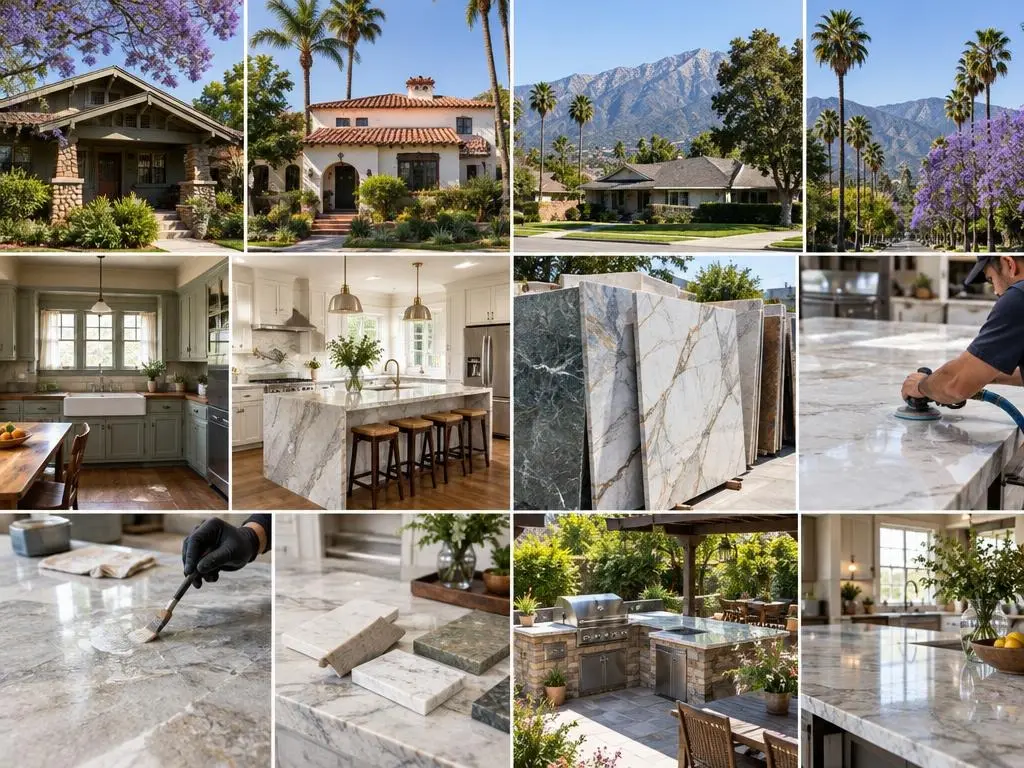
Quartzite and marble countertops both bring the soft white grounds and flowing veins that suit Pasadena's Craftsman, Spanish Revival and traditional homes. They are often displayed side by side, and slab yards do not always label them accurately. Knowing the difference before you buy saves disappointment later.
What quartzite is
True quartzite began as sandstone; heat and pressure deep underground fused its grains into a dense, very hard rock. It resists scratches and heat well and holds up in busy kitchens. It is natural, so it is not the same thing as engineered quartz, and it still needs periodic sealing. A few slabs marketed as quartzite turn out to be softer dolomite; a simple test is to see whether a sample scratches glass, which true quartzite will do.
What marble is
Marble formed from limestone and stays softer and more chemically reactive. Lemon juice, wine, tomato sauce and vinegar etch it, leaving dull marks on a polished surface, and a knife or pot base marks it sooner than granite or quartzite. Many people accept that and enjoy the patina, the way old European bakeries and bars do. Carrara is the common, more affordable white; Calacatta and Statuario cost much more for their bolder veins.
Honed or polished
A polished finish shows color and veining most strongly but also shows every etch mark. A honed, matte finish makes etching far less noticeable and hides Pasadena's hard-water rings better. For marble in a working kitchen, honed is usually the practical choice; quartzite can go either way.
Sealing and care
Both stones should be sealed, and HomeGuide recommends annual sealing for quartzite. On marble, sealer helps against stains yet does nothing for etching, since acid attacks the calcite directly. Use pH-neutral cleaners, wipe up acidic spills quickly, and avoid vinegar-based or scale-removing products on either stone.
Fabrication and installation
Quartzite is hard to cut and polish, which adds labor and time. Marble is easier to work but more fragile, especially around sink cutouts and thin strips between a cooktop and a wall. Both are heavy natural stone, so we check cabinets, fasten them securely and support every overhang. Veined slabs also need seams planned so the pattern flows; we review layout with you before cutting.
A note on silica
Natural stones contain varying amounts of silica, and California's dust-control rules for stone fabrication can apply to them as well as to engineered quartz. That affects how the stone is cut, not how it behaves on your counter.
What This Covers
Quartzite and marble projects include guidance on both stones before you commit.
Stone identification and selection
Help confirming whether a slab is true quartzite or a softer marble.
Honed and polished finishes
Finish chosen for how visible etching and water spots will be.
Kitchens, islands and baking stations
Full kitchens or a single marble pastry area paired with another material.
Sealing and care guidance
Sealer applied at install, with a simple routine for looking after it.
Typical Quartzite & Marble Countertops Costs
| What is priced | National figures |
|---|---|
| Quartzite, installed | $65 to $150 per sq ft |
| Quartzite, average kitchen (30 to 40 sq ft) | $1,950 to $6,000 |
| Marble, installed | $40 to $150 per sq ft |
| Marble, typical project (Angi) | $2,000 to $5,000 |
| Carrara slab, material | $40 to $50 per sq ft |
| Calacatta slab, material | $175 to $200 per sq ft |
| Sealing | $0.50 to $2.00 per sq ft |
From HomeGuide and Angi (2026). These are national figures. Los Angeles-area prices often run higher, and your square footage, edge choice, cutouts and site access move the final number. The figure on your signed quote is what you pay.
How It Works
1. Discuss your kitchen habits
Your cooking and cleaning routine points us toward quartzite or marble.
2. Select the slab
You approve the slab, and we confirm what stone it actually is.
3. Template and fabricate
The stone is templated, seams planned, and cut with wet methods.
4. Install and seal
We set the counter, apply sealer and leave you a short care sheet.
Quartzite & Marble Countertops Questions
Are quartzite and quartz the same material?
No. Quartzite is a natural stone cut from quarried rock, while quartz countertops are engineered from crushed stone and resin. You seal quartzite now and then; engineered quartz never needs it.
Does marble stain or etch easily?
It etches easily from acids such as lemon juice and vinegar, and it can stain if not sealed. A honed finish hides etching better than polished.
What do quartzite counters usually cost?
HomeGuide lists quartzite at $65 to $150 per square foot installed, or about $1,950 to $6,000 for an average kitchen. Rare colors cost more. The number on your signed quote is the one that counts.
How can I tell if a stone is real quartzite?
True quartzite scratches glass and resists a knife blade. Softer stones sold as quartzite will scratch. We help check samples before you buy.
Quartzite & Marble Countertops Service Areas
- Countertops in Pasadena, CA
- Countertops in Altadena, CA
- Countertops in South Pasadena, CA
- Countertops in San Marino, CA
- Countertops in La Cañada Flintridge, CA
- Countertops in Sierra Madre, CA
- Countertops in Arcadia, CA
- Countertops in Monrovia, CA
- Countertops in Temple City, CA
- Countertops in San Gabriel, CA
- Countertops in Alhambra, CA
- Countertops in Glendale, CA
- Countertops in Burbank, CA
- Countertops in La Crescenta-Montrose, CA
- Countertops in Eagle Rock, CA
- Countertops in Duarte, CA
- Countertops in Highland Park, CA
- Countertops in Rosemead, CA
Get a Quartzite & Marble Countertops Estimate
Set up a no-cost consult on quartzite and marble countertops.